
Fall is when a lot of homeowners take a hard look at their gutters. The leaves are coming down, the first cold nights are here, and that gutter that’s been sagging since spring suddenly seems like a bigger concern.
So should you replace your gutters before winter? Not always. Many gutter problems can be repaired, and a well-maintained system can make it through another season without trouble. But if your gutters are already failing, winter is usually when the damage gets worse.
The signs below can help you decide which situation you’re in.
Why Winter Is Hard on Gutters
Gutters do most of their work in spring and summer storms, but winter puts a different kind of stress on them.
Snow and Ice Add Weight
A gutter full of rainwater drains in minutes. A gutter full of ice can stay that way for days or weeks. Ice weighs roughly 57 pounds per cubic foot, and that load sits on the hangers and the fascia board behind the gutter the whole time. Hangers that were already loose, or fascia that’s already soft, are the first to give way.
Freeze-Thaw Cycles Stress Every Seam
Water expands by about 9% when it freezes. When water sits in a leaking corner, a cracked seam or a loose joint and then freezes, it can push that opening a little wider. After a winter of repeated freezing and thawing, a small drip can become a steady leak.
Ice Dams Can Pull Gutters Loose
On many homes, ice forms along the roof edge during snowy stretches. When that ice extends into the gutters, it adds weight and can pull sections away from the house. Gutters don’t cause ice dams by themselves, but clogged or sagging gutters can make them worse. Our article on whether gutters can cause ice dams explains how they form and how to prevent them.
Signs Your Gutters Should Be Replaced Before Winter
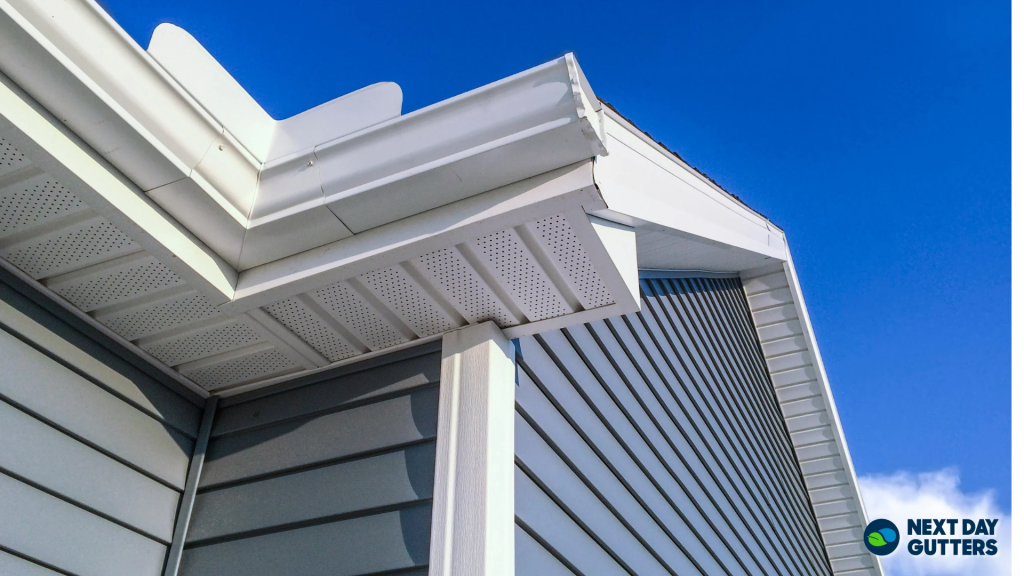
A single problem doesn’t always mean you need new gutters. But if you’re seeing several of these, replacement before the cold weather is worth considering:
- Gutters are sagging or pulling away from the house in more than one spot
- Several corners or seams are leaking
- The gutters are rusted, cracked, bent or split
- Water stands in the gutters days after it rains
- Fascia boards behind the gutters are soft, stained or rotting
- Gutters overflow in heavy rain even when they’re clean
- Previous repairs haven’t held
For more detail on each of these, see our article on signs it’s time to replace your gutters.
How Old Are Your Gutters?
Age matters too. Professionally installed seamless aluminum gutters typically last 20 to 30 years with proper maintenance. Galvanized steel gutters usually last 20 to 25 years, and vinyl gutters 10 to 20 years, depending on the climate. Copper gutters can last 50 years or more.
If your gutters are near the end of that range and you’re already seeing sagging, leaks or rust, repairs tend to come more often and hold for less time. Spending money on fixes before winter may only delay a replacement by a season or two.
If you’re not sure how old your gutters are, the fasteners can offer a clue. Spikes running through the front of the gutter into the fascia are common on older systems. Our article on how long gutters last covers what shortens their life and how to get more years out of them.
When a Repair Is Enough
If your gutters are in good shape overall, a targeted repair before winter may be all you need.
A single corner that drips can often be resealed. One loose section can usually be refastened. Gutters that overflow only because they’re full of leaves need cleaning, not replacing. And if one section is damaged but the rest of the system is sound, replacing just that section may make sense. Our article on whether you need to replace all your gutters walks through when partial replacement works.
Before you settle on a repair, ask whether it will hold through snow, ice and freezing temperatures. A patch that might last through a mild summer may not survive a winter of ice sitting in the gutter.
The Benefits of Replacing Gutters Before Winter
If your gutters are near the end of their life, replacing them in the fall has some practical advantages.
Stronger Hangers for Snow and Ice
Many older gutter systems were installed with spikes driven through the gutter into the fascia. Over time those spikes loosen, especially under the weight of ice. New gutters hung on heavy-duty hidden hangers that screw into the fascia are much better at carrying a winter load.
Fewer Seams to Leak and Freeze
Seamless gutters are formed on site from one continuous piece of aluminum for each run, so the only joints are at the corners, end caps and downspouts. Fewer seams means fewer places for water to sit, freeze and open a leak.
A Chance to Fix the Fascia
When old gutters come down, any rotted fascia behind them is easy to see and replace. Leaving soft wood in place through the winter gives water more time to spread the rot, and it gives the gutters a weak surface to hang on.
Better Drainage When the Snow Melts
Winter thaws can send a lot of water off the roof at once. New gutters can be sized for your roof, with 5-inch or 6-inch gutters and enough downspouts to handle the runoff. Downspouts can also be placed so meltwater drains away from walkways, driveways and the foundation, where it might otherwise refreeze into a slippery patch of ice.
Can Gutters Be Installed in Winter?
Yes. Gutters can be installed in cold weather, and aluminum gutters don’t need warm temperatures to go up. What slows things down is the weather itself. Snow on the roof, ice along the roof edge, heavy rain and high winds can all make installation unsafe and push your appointment back.
That’s why fall is often the easiest time to schedule. The weather is more predictable, the roof edge is clear, and the new gutters are in place before the first heavy snow.
Should You Add Gutter Guards at the Same Time?
If your home is surrounded by trees, fall is a good time to think about gutter guards. Leaves that land in the gutters in November can freeze in place in December and stay there until spring, blocking drainage all winter.
Gutter guards help keep leaves and debris out so water can keep moving through the system. They won’t stop ice from forming along the roof edge, but they can reduce the chance of a clogged gutter freezing solid. Installing guards along with new gutters means the system starts clean. Our guide to choosing the right gutter guards compares the most popular options.
What If You Wait Until Spring?
If your gutters are only showing minor wear, waiting may be fine. Clean them, make sure the downspouts drain and keep an eye on them through the winter.
But if they’re already sagging, leaking in several places or pulling away from rotted fascia, waiting usually means more damage to repair later. Ice can finish pulling down a loose section, leaks can spread rot further into the fascia and soffit, and water that spills next to the house can cause problems at the foundation.
Need New Gutters Before Winter?
Next Day Gutters has been serving homeowners since 1999, providing gutter installation, replacement, cleaning and repair services.
Our team can inspect your gutters and fascia, tell you whether a repair will hold through the winter or whether replacement makes more sense, and give you a written proposal with a firm price. We install seamless aluminum gutters in 22 colors, as well as copper gutters, downspouts and gutter guards, and our crews can replace damaged fascia as part of the same job.
Next Day Gutters serves homeowners throughout Maryland, Northern Virginia, Washington, DC, Delaware and North Carolina.
To get your gutters checked before the cold weather arrives, schedule a free estimate with Next Day Gutters.