
Gutter hangers don’t get much attention. They sit under the roof edge, mostly out of sight, and as long as the gutters stay up, nobody thinks about them.
But hangers carry the whole load. Every gallon of rainwater, every pile of wet leaves and every chunk of winter ice in your gutters hangs on them. When they loosen, bend or pull out of the wood, the gutter starts to sag, water stops draining the right way, and the damage spreads to the fascia and roof edge.
Failing hangers usually give plenty of warning. Below, we explain what to look for and how to decide whether new hangers will fix the problem or the gutters need more work.
What Do Gutter Hangers Do?
Hangers attach the gutter to the fascia board, the trim board that runs along the edge of the roof. They hold the gutter at the right height and the right slope so water runs toward the downspouts, and they keep the front edge of the gutter from spreading or drooping when it fills up.
If one hanger fails, the hangers on either side of it have to carry extra weight, and they can start to loosen too.
Common Types of Gutter Hangers
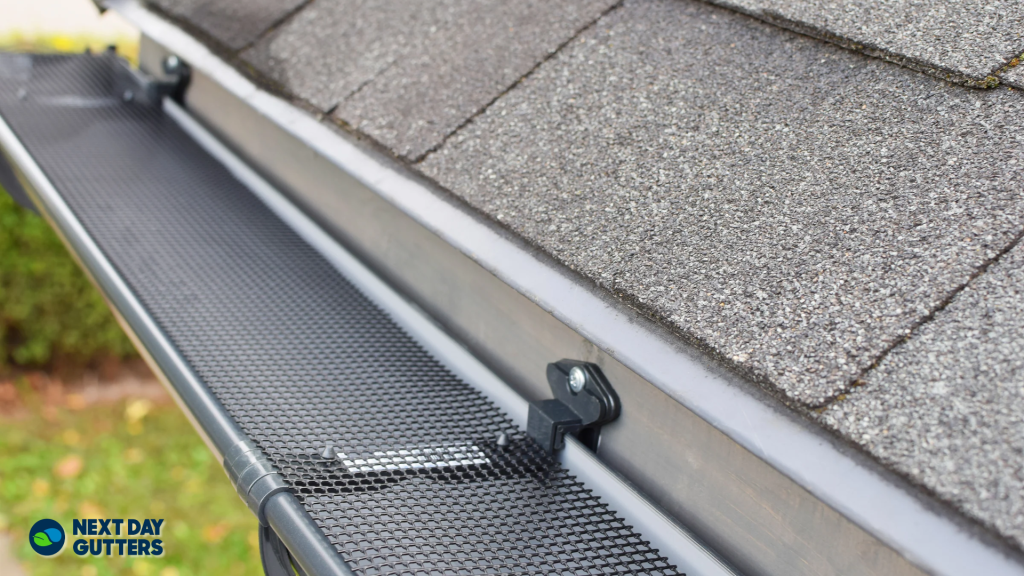
Knowing which kind of hanger your gutters have can tell you a lot about what to expect from them.
Spike and Ferrule
On many older homes, the gutters are held up by long nails, called spikes, driven through the front of the gutter, through a metal sleeve (the ferrule) and into the fascia. You can usually spot them from the ground as a row of round nail heads along the front of the gutter.
Spikes were the standard for decades, but they have a weakness. Wood expands and contracts with the seasons, and every cycle loosens the spike a little. Over the years, spikes back out of the fascia, and the gutter begins to drop.
Hidden Hangers
Hidden hangers clip inside the top of the gutter and fasten to the fascia with a screw. Because they sit inside the gutter, you can’t see them from the ground. Screws hold much better in wood than smooth spikes, and the hanger braces the front lip of the gutter so it keeps its shape under weight. Most new seamless gutters, including the ones we install, are hung this way.
Straps and Brackets
Some gutters hang from straps nailed to the roof deck under the shingles, or sit in brackets screwed to the fascia. Straps are common on homes without a fascia board. Brackets are often used with half-round gutters.
Signs Your Gutter Hangers Need Replacing
You can spot most hanger problems from the ground. Walk around the house on a clear day and look along each run of gutter.
The Gutter Sags Between Hangers
A straight gutter should look straight. If it dips in spots, or the top edge waves up and down along the roofline, the hangers in those spots have loosened or failed. Our guide to sagging gutters covers the other causes too.
Spikes Are Backing Out
On spike-and-ferrule gutters, look at the nail heads. If some stick out past the face of the gutter, or you can see a gap between the gutter and the fascia around them, they’re working loose. Once a spike starts backing out, it usually keeps going.
There’s a Gap Behind the Gutter
The back of the gutter should sit tight against the fascia. A gap means the gutter is tipping forward or pulling away. When that happens, water can run down behind the gutter instead of into it, soaking the fascia and siding. Our article on gutters pulling away from the house explains how to tell a hanger problem from a fascia problem.
Water Stands in the Gutter After Rain
If water is still sitting in the gutter a day or two after a storm, the slope is off. A loose hanger lets one section drop below the rest, and water collects in the low spot instead of running to the downspout.
The Front of the Gutter Is Spreading
When a gutter fills with water or ice, the weight pushes the front edge outward. Hangers brace that edge. If the front of the gutter looks bowed out or bent down, the hangers in that section are too weak or too far apart.
Hangers Are Bent, Broken, Rusted or Missing
If you can safely look into the gutter from a ladder, check the hangers themselves. Plastic hangers can crack after years in the sun. Thin metal hangers can bend under ice. Steel fasteners can rust through. Any gap where a hanger should be is a weak spot.
Stains or Rot on the Fascia
Dark streaks, peeling paint or soft spots on the fascia often show up near failing hangers, because water is getting where it shouldn’t. Rot is also a cause of hanger failure, since a screw or spike can’t hold in soft wood.
How Far Apart Should Gutter Hangers Be?
Spacing matters as much as the hangers themselves. Hangers are commonly placed every 24 to 36 inches, with closer spacing in areas that get heavy snow and ice. Spikes on older systems were often set much farther apart.
If your hangers are spread widely and the gutter sags between them, adding hangers can help, as long as the gutter and fascia are still in good shape.
Can You Replace the Hangers Without Replacing the Gutters?
Often, yes. If the gutters are in decent condition, the fascia is solid and the problem is limited to loose or failed hangers, new hidden hangers can be installed in the existing gutters. Many older spike-and-ferrule systems can be switched over this way, and the gutter can be re-pitched toward the downspouts at the same time.
New hangers aren’t the answer if:
- The fascia behind the gutter is rotten, since new screws won’t hold in soft wood
- The gutters are rusted, cracked or bent out of shape
- The corners and seams leak in several places
- The gutters are near the end of their lifespan
In those cases, new hangers would be holding up a system that’s already failing. Rotten fascia needs to be replaced first. See our page on fascia and soffit repair. And if the gutters themselves are worn out, our articles on how long gutters last and the signs it’s time to replace your gutters can help you decide.
Why Winter Is Hard on Hangers
Hangers do their hardest work in winter. Snow melts on the roof, runs into the gutter and refreezes, and the ice can stay there for days or weeks. All that time, the weight sits on the hangers. Loose spikes and weak hangers often give way in January or February, after a stretch of freezing and thawing.
If your hangers are already loose, fall is the time to deal with them. Our article on whether you should replace your gutters before winter goes over what to check.
Should You Replace Gutter Hangers Yourself?
Re-securing one loose hanger on a single-story house is a manageable job for a homeowner who is comfortable on a ladder. Larger jobs are a different story. Working along the roof edge, re-pitching a long run of gutter and checking the fascia for rot all take time, the right tools and a safe setup, especially on a two-story house.
If you see sagging in more than one spot, or the gutters are pulling away from the house, it’s worth having the whole system looked at. A loose hanger is sometimes the only problem, and sometimes it’s the first sign of rotten fascia or worn-out gutters.
Need Your Gutter Hangers Checked?
Next Day Gutters has been serving homeowners since 1999, providing gutter installation, replacement, cleaning and repair services.
Our team can inspect your gutters, hangers and fascia, tell you whether new hangers will do the job or whether replacement makes more sense, and give you a written proposal with a firm price. When we install new seamless gutters, we hang them on heavy-duty hidden hangers that screw into the fascia, and we can replace damaged fascia as part of the same job.
Next Day Gutters serves homeowners throughout Maryland, Northern Virginia, Washington, DC, Delaware and North Carolina.
To have your gutters and hangers checked, schedule a free estimate with Next Day Gutters.