
You notice a small gap between the gutter and the roofline. Maybe one section looks lower than the rest, or you can see a fastener sticking out where it wasn’t before.
It’s tempting to assume the gutter just needs to be pushed back into place. Sometimes the fix really is fairly simple. But gutters are attached to the fascia boards along the edge of your roof, and when they start pulling away, the problem may actually be with the wood behind them.
That’s something you don’t want to ignore. A loose gutter can get worse as it fills with rainwater, leaves, or ice, and damaged fascia won’t provide much support no matter how many times the gutter is reattached.
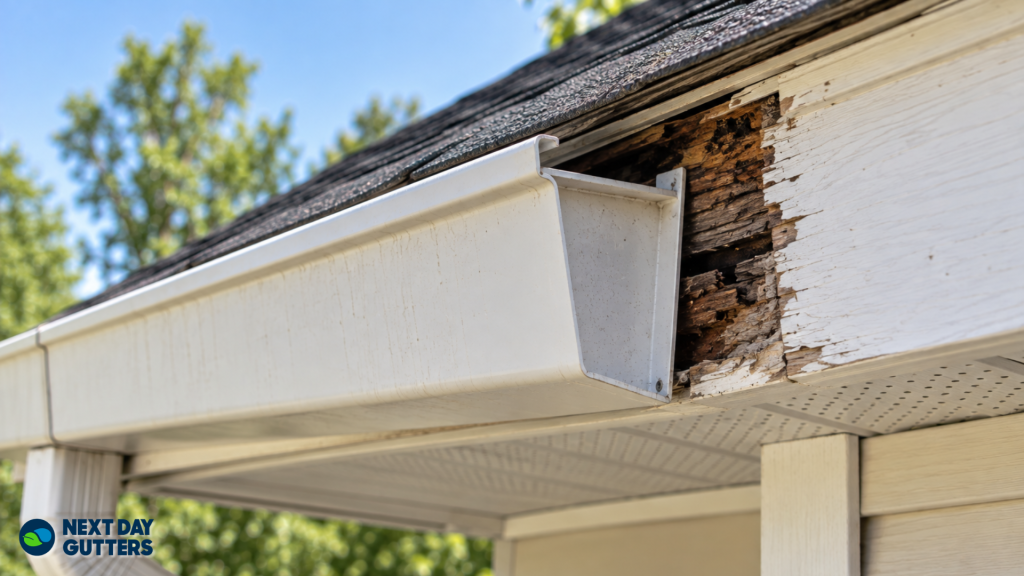
First, What’s Behind Your Gutters?
The board running along the edge of the roof behind your gutters is called the fascia board. It’s an important part of the gutter installation because this is where the gutter system is typically secured to the house.
The fascia gives the gutters a solid place to attach to the house. If that wood starts to rot, or the gutter hardware works loose over time, you may begin to see a gap forming along the roofline. Gutters packed with wet leaves or holding standing water can make the problem worse because of the added weight.
A gutter pulling away from the house is often the first visible clue that something in that system needs attention.
Rotten Fascia Can Cause Gutters to Come Loose
This is one of the bigger issues we look for when a gutter starts separating from the house.
Fascia is exposed to conditions that can lead to water damage, especially if the gutter has been leaking or allowing water to run behind it. Once wood begins to soften and rot, the fasteners holding the gutter don’t have the same solid material to grab onto.
At that point, simply tightening the gutter isn’t much of a repair. You’re putting a fastener back into wood that can no longer hold it properly.
Rotten fascia should be removed and replaced with sound material before the gutter is secured again. If the damage is hidden behind the gutter, it may not become obvious until the gutter starts sagging or pulling away.
Sometimes the Fascia Is Fine
Not every loose gutter means there’s rotten wood underneath it.
Hangers and fasteners can loosen over time, particularly on an older system. A gutter can also start moving because it’s regularly carrying more weight than it should.
Think about what happens when a gutter fills with wet leaves and the downspout becomes clogged. Instead of water entering the gutter and quickly draining away, the gutter may sit full of water and soaked debris. That’s a lot more weight hanging from the fascia.
Standing water can create a similar problem. If the gutter has lost its proper pitch, water may collect in a low spot rather than flowing toward the downspout.
Snow, Ice and Heavy Weather Can Pull Gutters Away
A gutter may be fine through most of the year and start pulling away after a stretch of bad winter weather. Snow and ice add weight to the system, and the problem can be worse when leaves and other debris are already sitting in the gutter.
Wet leaves and debris can freeze right along with the water sitting in the gutter. Now the gutter is carrying frozen debris and ice, sometimes for days at a time. Older or already-loose hangers may start giving way under that added weight.
Heavy rain can expose problems too. A clogged downspout can leave a gutter holding much more water than it normally would. If you notice a gutter separating from the house after a storm, don’t assume it only needs to be pushed back into place. Check for loose or broken hardware, standing water, clogged downspouts, and damage to the fascia behind it.
What Does Rotten Fascia Look Like?
Sometimes you can see the problem from the ground, especially after the gutter has started pulling away. Other damage is harder to spot until the gutter is removed or inspected up close.
Watch for:
- Soft or crumbling wood
- Peeling paint or discoloration along the roof edge
- Visible cracks or deteriorated areas
- Water running behind the gutter
- Gutters repeatedly loosening in the same spot
- Sections of fascia that look different from the surrounding wood
If you keep having the same section of gutter reattached and it keeps coming loose, the condition of the fascia is worth checking.
Can You Just Reattach a Gutter to Damaged Wood?
This is where a small gutter repair can turn into a slightly larger project.
If the fascia is rotten, the damaged wood needs to be addressed. Otherwise, there’s no solid base for the gutter.
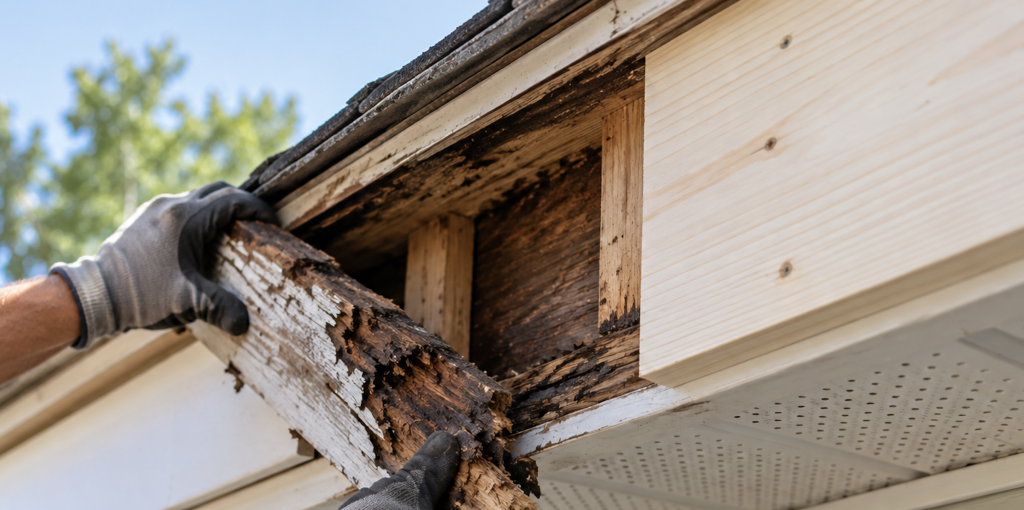
Next Day Gutters crews regularly encounter rotten wood while working on gutter replacements and repairs, so fascia board repair and rotten wood replacement can be handled as part of the job. The damaged section can be removed, new material installed, and the gutter then attached to a sound surface.
This can be especially convenient during a gutter replacement. Once the old gutters come down, we can see areas of the fascia that weren’t visible before and take care of problems before the new gutters go up.
Fascia Wrapping Can Finish the Job
Homeowners sometimes hear fascia repair and fascia wrapping used together, but they’re not the same thing.
Repair or replacement deals with damaged wood. Wrapping covers the fascia with a finished exterior material after the underlying wood is in suitable condition.
Next Day Gutters can both replace and wrap fascia boards. For homeowners already installing new gutters, wrapping can help give the roofline a clean, finished appearance and provide an exterior covering for the fascia.
This work can also be coordinated with the soffit.
Where Does the Soffit Fit In?
Look underneath the roof overhang and you’ll see the soffit. The fascia faces outward along the roof edge; the soffit finishes the underside.
They’re separate parts of the home, but problems in this area don’t always stay neatly confined to one piece. If water has been getting behind the gutters or affecting the roof edge, it’s worth looking at the surrounding materials rather than assuming the fascia is the only thing involved.
Next Day Gutters can replace damaged soffit along with performing fascia and gutter work. If you’re already replacing gutters and dealing with deteriorated wood, doing the related work together can also give the roofline a more consistent finished appearance.
Do Pulling Gutters Need to Be Repaired or Replaced?
That depends on what we find.
A newer gutter that’s loose in one spot may only need a localized repair. If a hanger failed but the gutter and fascia are otherwise in good shape, there’s little reason to replace an entire system.
The situation looks different when you have an older gutter that’s pulling away in several places, leaking, sagging, or no longer draining correctly. If the fascia also needs extensive work, replacing the aging gutter system while the wood is being repaired may make more sense than continuing to patch individual problems.
We’ve seen both situations. That’s why the condition of the gutter and the wood behind it need to be looked at together.
Don’t Wait for the Gutter to Fall
A gutter that’s beginning to pull away isn’t likely to fix itself.
The gap can allow water to get behind the gutter, which may make an existing wood problem worse. A loose section can also put additional strain on the hangers around it. Add a heavy rainstorm or a gutter full of wet leaves, and a small separation can become much more noticeable.
You don’t necessarily need a whole new gutter system. But you do want to know whether the problem is a loose hanger, rotten fascia, poor drainage, or some combination of the three.
We Can Repair More Than the Gutter
When Next Day Gutters works on a gutter system, we can also take care of problems we find along the roofline. That includes fascia board repair, rotten wood replacement, fascia wrapping, soffit replacement, gutter repair, and seamless gutter replacement.
So if the gutter is pulling away because the wood behind it has deteriorated, you don’t have to repair the fascia first and then start over with another company for the gutter work.
If you’ve noticed a gutter separating from your house, contact Next Day Gutters for an estimate. We’ll take a look at the gutter and the area behind it to determine what actually needs to be repaired.