
When icicles start hanging from the edge of the roof, many homeowners assume the gutters are to blame. It’s an easy connection to make. The ice is sitting right in the gutters, and sometimes it’s pulling them away from the house.
But gutters usually aren’t what starts an ice dam. The cause is higher up, in the attic and on the roof itself. That said, the condition of your gutters can affect how much ice builds up at the roof edge and how much damage it does once it’s there.
Below, we explain what causes ice dams, where gutters fit in, and what you can do before winter to lower the risk.
What Is an Ice Dam?
An ice dam is a ridge of ice that forms along the lower edge of a roof. It usually starts at the eaves, the part of the roof that hangs out past the walls of the house, and it can extend into the gutters.
The damage comes from melting snow higher on the roof that runs down and gets trapped behind that ridge. With nowhere to drain, the water can pool on the roof and work its way under the shingles.
How Do Ice Dams Form?
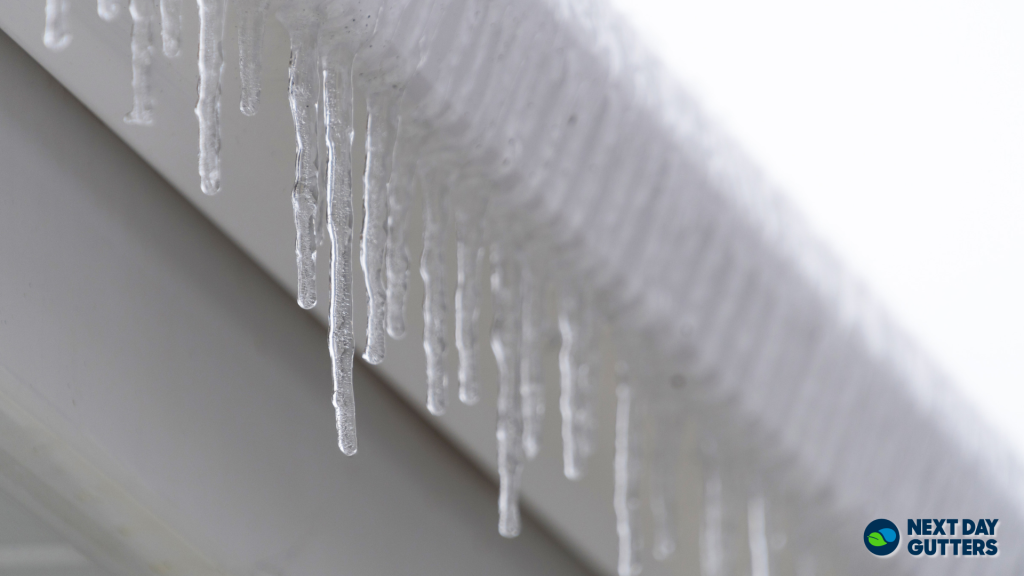
Ice dams need three things: snow on the roof, a warm section of roof higher up, and a cold section of roof at the edge.
Most of the time, the warm section comes from heat escaping the house. Warm air leaks into the attic through gaps around light fixtures, plumbing vents, wiring, chimneys and attic hatches. When the attic isn’t well insulated or well ventilated, that heat warms the underside of the roof and melts the snow sitting on it, even on days when it’s below freezing outside.
The meltwater runs down the roof until it reaches the eaves. Because the eaves hang out past the heated part of the house, they stay much colder. The water refreezes there. Over several days of melting and refreezing, that ice grows into a dam.
Sunshine on the roof and gutters can melt snow near the edge too, which is one reason icicles often form even on well-insulated houses.
Can Gutters Cause Ice Dams?
Not by themselves. Ice dams can form on houses with no gutters at all, because the cause is heat loss through the roof, not the gutter system.
However, gutters that are clogged, sagging or draining poorly can make an ice dam bigger and harder on your home.
Clogged Gutters Hold Water That Freezes
When gutters are full of leaves and other debris, rain and meltwater can’t drain through them. That water sits in the gutter and freezes when the temperature drops. Now the ice dam has a solid base to build on, and it can grow back up the roof faster than it would otherwise.
This is one reason gutter cleaning in late fall matters. Leaves that are still in the gutters in December are often frozen in place until spring.
Sagging Gutters Collect Standing Water
Gutters need a slight slope toward the downspouts. If sections have sagged or were installed without enough pitch, water stays in the low spots instead of draining. In cold weather, those low spots fill with ice.
Frozen Downspouts Back Up the System
A downspout that’s clogged or frozen at the bottom stops the whole run of gutter from draining. Water that can’t get out has nowhere to go but over the side or back toward the roof edge, where it can add to the ice that’s already there.
What Damage Can Ice Dams Cause?
A thin line of ice at the roof edge may never cause a problem. A large ice dam that holds back water for days is different.
When water backs up under shingles, it can leak into the attic, soak insulation, and show up as stains on ceilings and the upper parts of exterior walls. Over time, repeated leaks can lead to mold, rotted roof sheathing and damaged fascia boards.
The gutters can take a beating too. Ice is heavy, at roughly 57 pounds per cubic foot, and a gutter packed with it puts real strain on the hangers and the fascia behind them. That weight is a common reason gutters bend, sag or pull away from the house after a hard winter.
Signs You May Have an Ice Dam
You don’t have to get on a ladder to spot most ice dams. From the ground, look for:
- A thick ridge of ice along the edge of the roof
- Large icicles hanging from the gutters, especially along with ice on the shingles above them
- Icicles or ice forming behind the gutters or on the siding
- Water stains or damp spots on ceilings near exterior walls
- Gutters that look bent or are pulling away from the fascia
Icicles alone don’t always mean you have an ice dam, but they’re a good reason to take a closer look at the roof edge.
How to Prevent Ice Dams
Because the root cause is heat escaping into the attic, the most effective fixes happen inside the house, not at the gutters.
Seal Air Leaks Into the Attic
Gaps around recessed lights, plumbing and electrical penetrations, chimneys and attic hatches let warm air into the attic. Sealing those openings is often one of the most effective steps, because it keeps heat out of the space where it does the most damage.
Add Attic Insulation
Insulation slows the heat moving from your living space into the attic. Many older homes have far less than current recommendations call for. An energy auditor or insulation contractor can tell you how much you have and how much you need.
Keep the Attic Ventilated
Soffit and ridge vents let cold outside air move through the attic, which helps keep the roof deck closer to the outdoor temperature. Insulation shouldn’t block the soffit vents at the eaves.
Clear Snow From the Lower Roof
After a heavy snowfall, removing snow from the bottom few feet of the roof with a long-handled roof rake takes away the snow that would otherwise melt and refreeze at the edge. Work from the ground, never from the roof, and stay well away from power lines.
Use Heat Cables as a Short-Term Fix
Heat cables along the roof edge and in the gutters can keep a channel open for meltwater to drain. They can help in trouble spots, but they treat the symptom rather than the cause.
How to Get Your Gutters Ready for Winter
Your gutters can’t stop an ice dam from forming, but gutters in good shape can keep one from getting worse. Before the first freeze:
- Clean out leaves and debris after most of the leaves have fallen
- Flush the downspouts and make sure they drain freely
- Check that the gutters slope toward the downspouts and don’t hold standing water
- Tighten or replace loose hangers so the gutters can carry the extra weight of snow and ice
- Look for soft or rotted fascia boards behind the gutters
- Make sure downspouts discharge away from walkways and driveways, where meltwater can refreeze
Do Gutter Guards Prevent Ice Dams?
No. Gutter guards keep leaves and debris out of the gutters, which helps water drain and reduces the chance of a clogged gutter freezing solid. But ice can still form on top of the guards and along the roof edge if heat is escaping through the roof. Our article on whether gutter guards really work covers what they can and can’t do.
What to Do If You Already Have an Ice Dam
If you see an ice dam forming, avoid the urge to chip it away with a hammer, shovel or ice pick. It’s easy to damage shingles and gutters that way, and climbing onto an icy roof is dangerous.
Instead, use a roof rake from the ground to remove snow above the dam so there’s less water feeding it. Check your attic and ceilings for signs of leaks. If water is getting into the house or the ice is very thick, a roofing professional can remove the ice safely, often with steam.
Once the weather warms up, have the gutters, hangers and fascia checked for damage. Ice-related damage is easier to repair before spring rains arrive.
Need Help Getting Your Gutters Ready for Winter?
Next Day Gutters has been serving homeowners since 1999, providing gutter installation, replacement, cleaning and repair services.
If your gutters are sagging, pulling away from the house or holding standing water, our team can inspect the system before the cold weather arrives and help you decide whether a repair will hold or whether it’s time to replace your gutters before winter. We install seamless aluminum gutters on heavy-duty hidden hangers, and we can replace damaged fascia and add gutter guards at the same time.
Next Day Gutters serves homeowners throughout Maryland, Northern Virginia, Washington, DC, Delaware and North Carolina.
To get your gutters checked before winter, schedule a free estimate with Next Day Gutters.