
Do gutter guards really work? Ask a few gutter companies and you may get completely different answers.
Some companies install gutter guards every day. Others recommend routine gutter cleaning instead and argue that gutter guards eventually clog, collect debris, cause gutters to overflow, or simply aren’t worth the money.
There’s a reason homeowners hear such different opinions: not all gutter guards are the same.
There are inexpensive screens and DIY inserts, micro-mesh filters, perforated covers, reverse-curve systems, and professionally installed gutter protection systems. How well any of them perform depends on the product, the installation, the condition of the gutters underneath, the roof, and even the trees surrounding the house.
So saying that every gutter guard works perfectly isn’t accurate. But saying that gutter guards simply don’t work isn’t accurate either.
Let’s look at some of the most common claims homeowners hear about gutter guards and what’s actually behind them.
Claim: “Gutter Guards Always Fail Eventually”
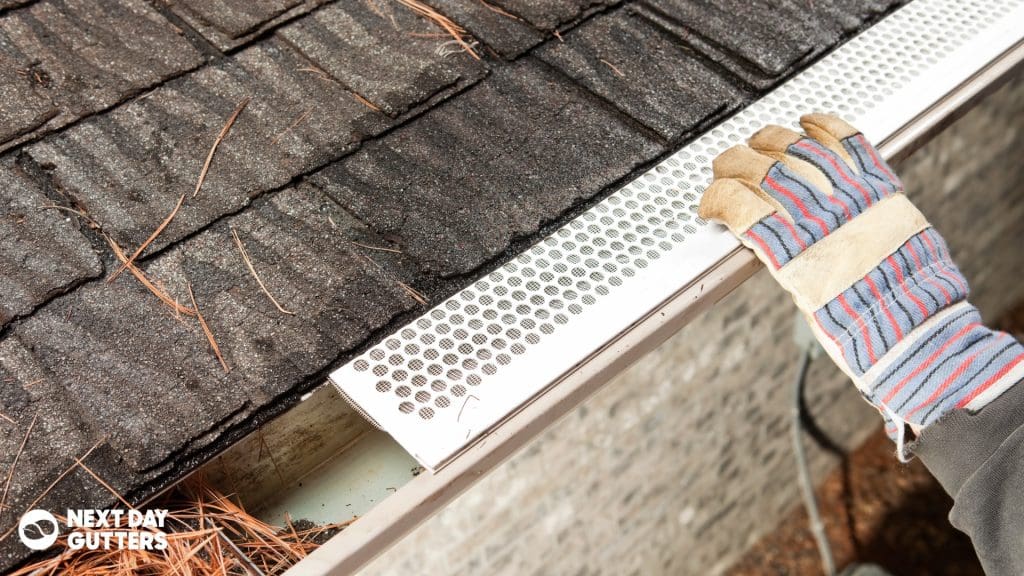
This is probably the biggest argument against gutter guards, and it treats a very large category of products as though they’re all the same.
They’re not.
A basic screen with large openings will handle debris differently from a micro-mesh filter. A reverse-curve cover works differently from a perforated aluminum guard. Some systems sit on top of the gutter, while others fit inside it.
Installation matters too.
A guard that isn’t properly secured, doesn’t fit the gutter, or isn’t appropriate for the roof can create problems regardless of how good the product itself may be.
That’s one reason Next Day Gutters doesn’t rely on a single gutter guard for every home. We install several types and evaluate the property before recommending one.
Claim: “Debris Always Finds Its Way Into the Gutters”
Can some debris get through certain gutter guards? Yes.
The more useful question is how much and what kind.
A screen designed to stop oak leaves may have openings large enough for pine needles or small particles to pass through. A finer micro-mesh filter is specifically designed to address smaller debris such as pine needles and shingle grit.
This is why tree coverage matters when choosing gutter protection.
A house surrounded by pine trees has a different debris problem from a house surrounded by oaks. Acorns, seed pods, tassels, pine cones, twigs, leaves, and roof grit all behave differently.
Matching the guard to what’s actually falling onto the roof makes far more sense than assuming one product will work equally well everywhere.
Claim: “Leaves and Debris Just Pile Up on Top of Gutter Guards”
This can happen.
Leaves can land on a gutter guard just as they land on the roof, driveway, deck, or anywhere else outside. Finding leaves on top of a guard doesn’t necessarily mean the gutter underneath is clogged.
That distinction is important.
With an open gutter, debris falls directly into the channel where water needs to flow. With a gutter protection system, the objective is to keep as much of that material as possible out of the gutter.
Some guard designs also do a better job of shedding surface debris than others. Roof pitch, guard design, airflow, the type of debris, and weather conditions can all affect whether material blows off or stays on the surface.
Surface buildup shouldn’t be ignored indefinitely, but it also shouldn’t automatically be confused with a clogged gutter.
Claim: “You Still Have to Clean Gutters With Gutter Guards, So What’s the Point?”
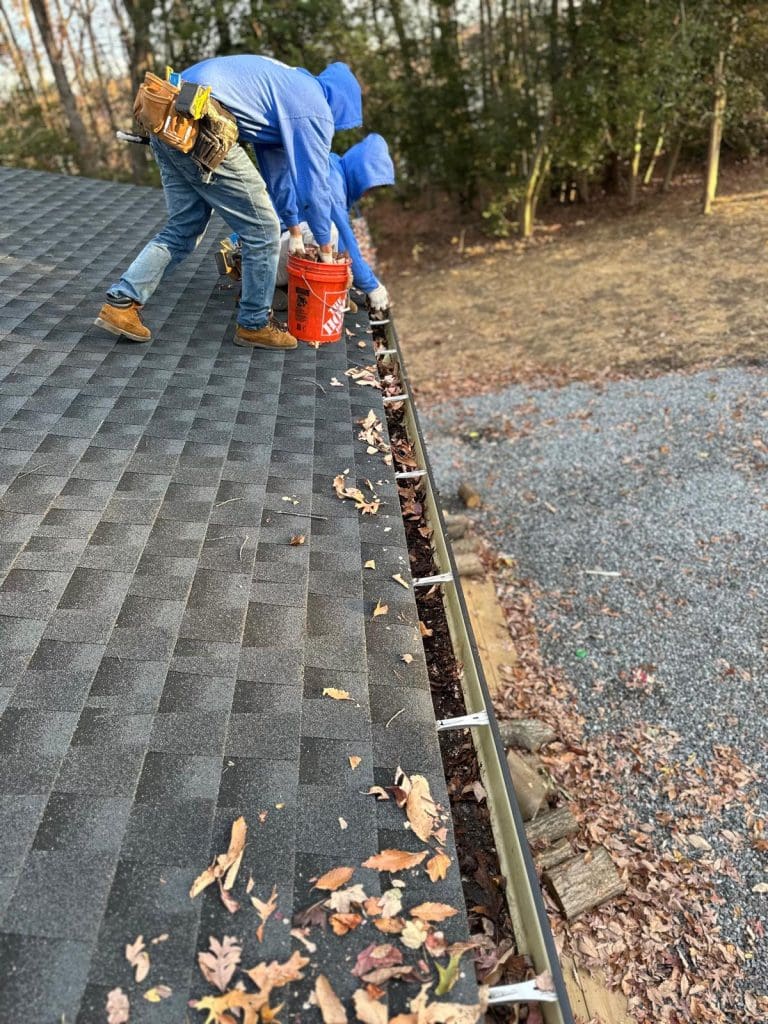
This argument conflates two distinct things: reducing maintenance and eliminating it altogether.
No exterior part of a home should be installed and then ignored forever.
Gutter guards should still be inspected periodically. A storm can drop branches onto the roof. A guard can become damaged. Leaves or other material can collect on exterior surfaces. Downspouts and drainage areas should still be checked.
A properly selected gutter guard is intended to reduce the repeated accumulation of debris inside the gutter channel.
That can make a substantial difference for a house that otherwise needs its gutters cleaned several times each year.
A 2026 This Old House survey of 1,000 homeowners found that 93% were satisfied or very satisfied with how well their gutter guards blocked debris. The survey also found that 41% cleaned their gutters about once a year after installation, while 17% said they didn’t clean them at all. The results don’t suggest that gutter guards eliminate maintenance, but they don’t support the idea that these systems simply don’t work either.
Claim: “Gutter Guards Cause Gutters to Overflow”
If water is pouring over the edge of a gutter with a guard installed, something isn’t working correctly…but the guard isn’t automatically the cause.
Gutters can overflow for several reasons:
- The gutter is undersized for the amount of roof runoff.
- There aren’t enough downspouts.
- A downspout is clogged.
- The gutter has lost its proper pitch.
- Water is concentrated in one section of the roof.
- The existing gutters were already in poor condition.
- The guard isn’t appropriate for the roof or rainfall volume.
- The guard was installed incorrectly.
- Surface debris has been allowed to accumulate.
This is also why gutter guards shouldn’t simply be installed over an existing system without checking it first.
At Next Day Gutters, existing gutters are inspected before guards are installed. We look for leaks, structural damage, loose sections, and other issues, and clean the gutters before the protection system is installed.
If the gutters are too worn or damaged, replacing them first may be the better option.
Putting a new gutter guard over a gutter that already doesn’t drain correctly isn’t going to fix the underlying problem.
Claim: “Gutter Guards Can’t Handle Heavy Rain”
Some can’t. That’s another reason it’s difficult to make a blanket statement about gutter guards.
A steep roof can send a large amount of water toward the gutter very quickly. Valleys and complex rooflines may concentrate runoff into particular areas. The gutter, downspouts, and guard all need to be able to handle that water.
When we evaluate a home for gutter protection, roof pitch and slope are part of the process. We also consider rainfall volume, existing gutter condition, and downspout configuration.
The goal isn’t simply to cover the gutter. It’s to keep debris out without interfering with the gutter’s ability to move water.
Claim: “Gutter Guards Cause Fascia Rot and Water Damage”
Rotten fascia is usually a sign that water has been going somewhere it shouldn’t.
That deserves attention whether a home has gutter guards or not.
A clogged open gutter can overflow, keeping the fascia wet. So can an improperly pitched gutter, a leaking seam, a damaged roof edge, a poorly installed guard, or a gutter system that can’t handle the amount of water coming from the roof.
The condition of the fascia should therefore be checked before gutter guards are installed.
If there’s existing rot or structural damage behind the gutter, covering it up with a new product doesn’t solve anything. The damaged area needs to be addressed first.
Claim: “Routine Gutter Cleaning Is Cheaper Than Gutter Guards”
It can be. It can also be more expensive over time. There isn’t one answer because every property is different.
A homeowner with a one-story house and very few trees may only need occasional gutter cleaning. In that situation, paying for a gutter protection system may not be a priority.
Now consider a two- or three-story home surrounded by mature trees that needs professional gutter cleaning several times a year. The calculation changes.
When comparing the two options, look at how often the gutters currently need cleaning, what each cleaning costs, how accessible the gutters are, and how long you expect to stay in the home. Then compare that with the installed cost and warranty of the gutter protection system you’re considering.
The decision should be based on your property, not on a claim that one option is always cheaper.
Photos of Failed Gutter Guards Don’t Tell the Whole Story
You’ve probably seen photos online of gutter guards covered with leaves, weeds, moss, or other debris. They can look convincing.
But a photo doesn’t tell you what product was installed, how old it is, whether it was installed correctly, what condition the gutters were in beforehand, or how the system had been maintained.
Most importantly, one failed gutter guard doesn’t tell you how every other gutter guard will perform.
There are legitimate reasons a gutter protection system can perform poorly. That’s why homeowners should ask what they’re buying, how it works, and why it’s appropriate for their home.
So, Do Gutter Guards Really Work?
Yes, gutter guards can work, but the product and installation matter. They aren’t magic, and they don’t make the rest of your gutter system irrelevant. The gutters still need to be properly sized and pitched. Downspouts still need to drain correctly. Existing damage should be repaired. And the gutter protection system should be appropriate for the roof, rainfall, and debris conditions around the property.
That’s a much different proposition from attaching an inexpensive screen to a failing gutter and expecting it to solve every drainage problem.
It’s also why we’re skeptical of claims at either extreme. No single gutter guard is perfect for every home, and gutter guards as a category don’t all “fail” simply because some products or installations do.
The Better Question: Which Gutter Guard Will Work for Your Home?
At Next Day Gutters, we don’t sell one franchised gutter guard and recommend it to every homeowner.
We install several gutter protection systems, including micro-mesh filters, perforated gutter covers, helmet-style systems, and powder-coated screens.
Available products include Klear MicroMesh, Klear PERFormance, Bulldog Gutter Guards, MicroMesh Pro, Gutter Glove Pro, Leaf Blaster Pro, Leaf Relief, Leaf Sentry, and K-Screen.
That allows us to assess the roof, tree coverage, debris, existing gutters and downspouts, and budget before making a recommendation.
For some homes, fine debris makes micro-mesh a good fit. Another property may need a different approach. And if the existing gutters aren’t in good enough condition for guards, we’ll address that first.
Next Day Gutters has been serving homeowners since 1999, with more than 13,000 installations across our service areas. Our gutter guard installations are backed by warranties on materials, labor, and performance.
Still not sure about gutter guards? Schedule an estimate with Next Day Gutters. We’ll take a look at your gutters and show you the options that would work best for your home.