
Cleaning leaves, pine needles, twigs, and other debris out of gutters isn’t how most homeowners want to spend a Saturday. Gutter guards can reduce how much debris enters your gutters, but choosing the right system isn’t always as straightforward as it sounds.
There are several types of gutter guards available, and they don’t all work the same way. Some sit inside the gutter, while others cover the opening. Some are designed primarily for larger leaves, while others use a fine mesh to keep smaller debris out.
If you’re comparing gutter guards for your home, understanding those differences can help you choose a system that fits your roof, surrounding trees, and existing gutters.
What Do Gutter Guards Actually Do?
Gutter guards are designed to keep leaves and other debris from entering the gutter while allowing rainwater to continue flowing through the system.
Without protection, debris can accumulate inside the gutter and eventually restrict the movement of water. A clogged gutter or downspout can cause water to spill over the sides rather than being carried safely away from the home.
That overflow can affect more than the gutters themselves. Water may end up around the fascia, siding, landscaping, walkways, or foundation.
Gutter guards are intended to reduce that buildup and keep the gutter system flowing more consistently.
What Are the Different Types of Gutter Guards?
If you search for gutter guards available near you, you’ll probably find a wide range of products that look very different from one another. Most can be grouped into a few basic categories.
Micro-Mesh Gutter Guards
Micro-mesh systems use very small openings to allow water into the gutter while preventing leaves and smaller debris from getting through.
The fine mesh makes this type of gutter guard particularly useful on properties where smaller debris is a concern. That can include pine needles, seed pods, shingle granules, and other material that may pass through guards with larger openings.
Micro-mesh systems can vary considerably in construction and installation method, so the type of frame and how the guard attaches to the gutter are important considerations.
Screen Gutter Guards
Screen-style gutter guards use openings that allow rainwater through while blocking larger debris.
They tend to have larger openings than micro-mesh products, making them effective at stopping leaves and larger debris. However, smaller material may still find its way through some screen systems.
For homes surrounded primarily by broadleaf trees, a quality screen can provide a straightforward approach to gutter protection.
Perforated Gutter Guards
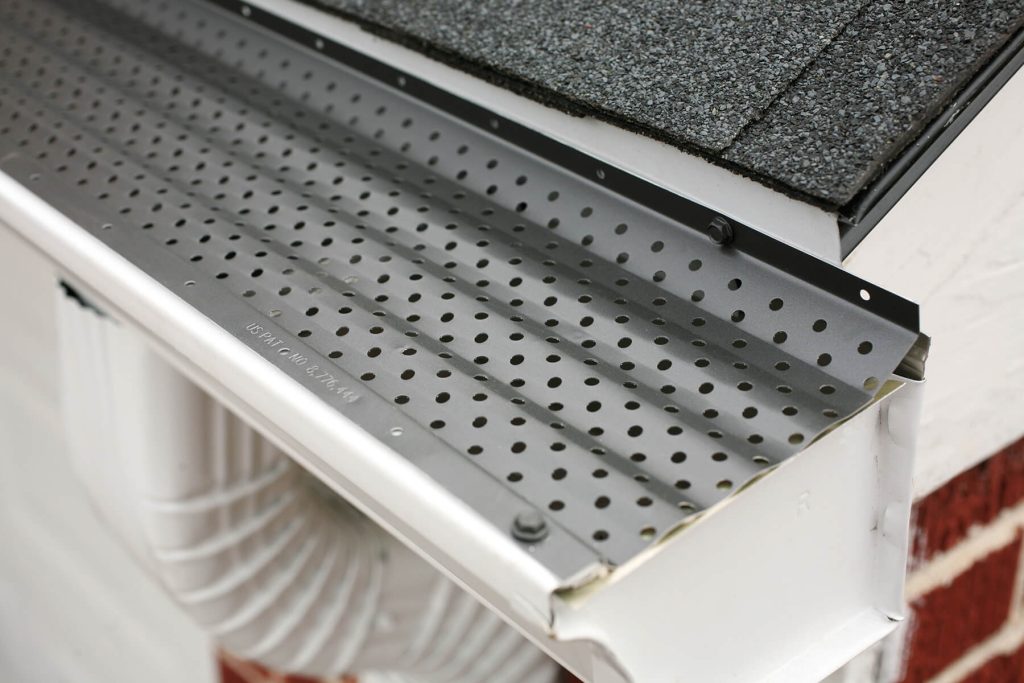
Perforated guards typically use a solid aluminum surface containing holes that allow water to enter the gutter.
Because the guard covers the gutter opening, leaves and larger debris stay above the system rather than falling directly inside.
The size and placement of the openings matter. A system needs to allow enough water through during heavy rain while preventing debris from entering and accumulating inside the gutter.
Gutter Inserts
Some gutter protection systems are designed to fit inside the existing gutter rather than covering it from above.
A well-designed insert can reinforce the gutter while allowing water to move through the system. Depending on the design, airflow can also help dry and move debris away instead of allowing it to collect.
Next Day Gutters installs Klear® Performance Gutter Guards, a high-strength aluminum gutter insert designed to fit securely inside the existing gutter. Its patented ribbed design promotes airflow that helps debris lift and blow away while allowing the gutter to handle heavy rainfall.
Klear also uses a front and rear attachment system that reinforces the gutter structure without interfering with existing roof shingles.
Foam and Brush Gutter Guards
Foam and brush products are also available, particularly as do-it-yourself options.
Foam guards sit inside the gutter and allow water to pass through while attempting to block debris. Brush systems use bristles to catch leaves while water continues into the gutter.
These products can be relatively easy to install, but debris can become caught on or within the material. That means they may still require periodic cleaning and maintenance.
Which Gutter Guard Is Best for Pine Needles?
Pine needles create a different challenge than larger leaves.
Because they’re narrow, pine needles can pass through openings that would easily stop a maple or oak leaf. They can also become lodged in screens and openings.
For homes surrounded by pine trees, the size of the openings in the gutter guard becomes especially important. A finer micro-mesh system is often better suited to keeping pine needles from entering the gutter.
We’ve covered this issue in greater detail in our guide to choosing the best gutter guard for pine needles.
What Should You Look for in a Gutter Guard?
The best gutter guard isn’t necessarily the one with the most complicated design. It is the one that works with your home and continues allowing the gutter system to do its primary job: move water.
Before scheduling a gutter guard installation, consider several factors.
The Trees Around Your Home
Look at what’s actually ending up on your roof.
Large leaves present a different problem than pine needles, seed pods, blossoms, or other small debris. A system that works well for one property may not be the best choice for another.
How Much Rainwater Your Gutters Handle
Keeping debris out doesn’t help if the guard prevents water from entering quickly enough.
A gutter protection system should be able to handle the amount of water coming off the roof during heavy rainfall. This becomes especially important on steep roofs and homes with large roof areas.
Your Existing Gutters
Gutter guards are only as useful as the gutter system underneath them.
Before installing guards, the gutters should be checked for sagging, improper pitch, leaks, loose attachments, and drainage problems. Installing gutter guards over a failing gutter system won’t correct those underlying issues.
If the gutters themselves are approaching the end of their useful life, it may make more sense to address gutter replacement before adding protection.
How the Guard Is Installed
Installation methods vary considerably.
Some systems slide underneath roof shingles, while others attach directly to the gutter. Homeowners should understand how a product will be installed and whether it affects the roof or existing gutter system.
Durability
Gutter guards remain exposed to rain, wind, sun, temperature changes, falling branches, and other outdoor conditions year after year.
Material and construction quality therefore matter. Aluminum and stainless steel components generally provide a more permanent solution than materials that can deteriorate, warp, or become brittle over time.
Do Gutter Guards Mean You’ll Never Have to Think About Your Gutters Again?
No exterior component of a home should be completely ignored.
A quality gutter guard system can dramatically reduce the amount of debris entering the gutters, but homeowners should still periodically inspect the roofline, gutters, and downspouts.
Branches can fall, storms can cause damage, and debris can collect on roofs and exterior surfaces.
The goal of gutter guards is to prevent clogging and reduce the need for routine gutter cleaning, not to make the entire drainage system something you never look at again.
Are Gutter Guards Worth Installing?
For many homeowners, they can be.
Gutter guards may be particularly useful if:
- Your home is surrounded by trees.
- Your gutters clog frequently.
- You’re cleaning gutters several times each year.
- Accessing your gutters requires a tall ladder.
- You want to reduce the amount of debris entering your gutter system.
- You’re installing new gutters and want to protect them from the beginning.
The value depends heavily on the quality of the product and whether it’s appropriate for the conditions around your home.
A cheap guard that constantly needs to be removed and cleaned isn’t much of an improvement over cleaning the gutter itself.
Should You Install Gutter Guards Yourself?
Some gutter guards are marketed specifically for DIY installation, while others are designed for professional installation.
The difficulty depends on the home, roofline, height, gutter condition, and product being installed. Working from a ladder along the edge of a roof also introduces safety concerns that shouldn’t be overlooked.
A professional gutter guard installer can inspect the existing gutters before installation, identify drainage or attachment problems, and make sure the protection system is properly secured.
That’s particularly important if the gutters need repairs or adjustments before the guards are installed.
What Should You Ask a Gutter Guard Contractor?
If you’re comparing companies after searching for a gutter guard contractor or gutter guards installation, don’t base the decision solely on the product name or price.
Ask what type of system is being installed and why it’s appropriate for your property.
It’s also worth asking:
- How does the system handle heavy rain?
- What type of debris is it designed to keep out?
- Does the installation interfere with the roof shingles?
- What material is the guard made from?
- Will the gutters be inspected before installation?
- Are existing gutter problems addressed first?
- What warranty comes with the system?
A contractor should be able to explain how the system works rather than simply telling you that one product is the best option for every home.
Choosing the Right Gutter Guard for Your Home
There isn’t one gutter guard design that’s ideal for every house.
A home surrounded by pine trees has different needs from a property with few trees. A large, steep roof may require different water-handling capabilities than a smaller roof. The age and condition of the existing gutters also need to be considered.
That’s why choosing a gutter guard should start with the property rather than the product.
Next Day Gutters installs several gutter protection solutions, including Klear® Performance Gutter Guards, and can evaluate your existing gutters before recommending a system. If repairs or gutter replacement are needed first, those issues can be identified before the guards are installed.
If you’ve been researching gutter guards and aren’t sure which option makes sense for your home, contact Next Day Gutters for an evaluation and gutter guard installation estimate.