
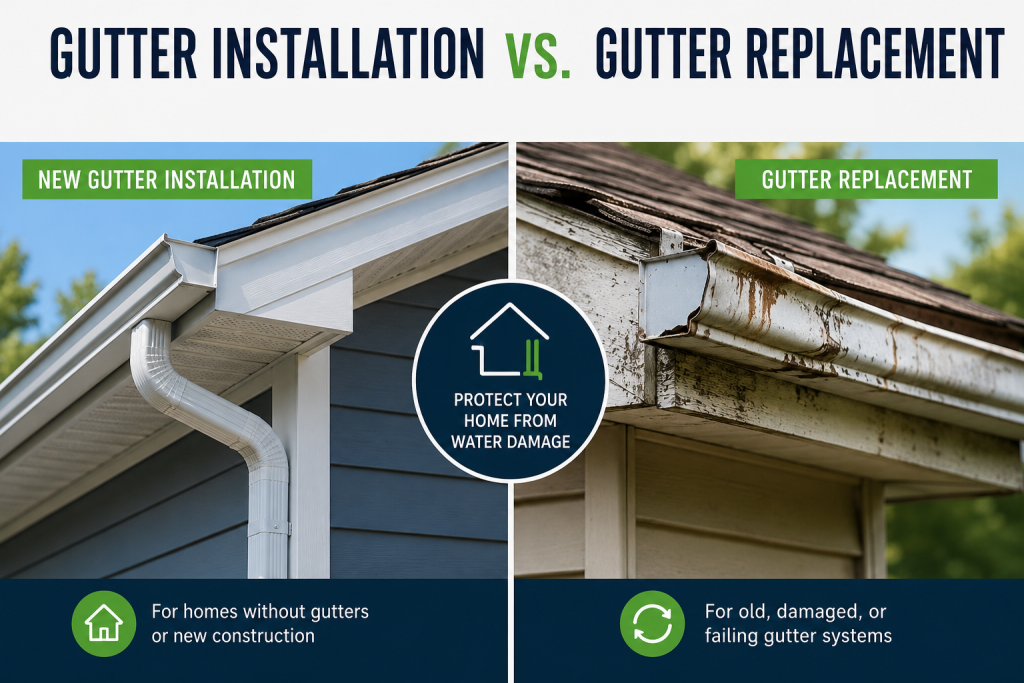
If you’re having problems with your gutters, it’s not always obvious what the solution should be. Do you need a repair? Is it time to replace the existing gutters? Or does your home need a completely new gutter installation?
The terms gutter installation and gutter replacement are often used interchangeably, but there is a difference. A new installation typically involves adding gutters where they don’t currently exist or installing a gutter system as part of new construction or a major renovation. Gutter replacement means removing an existing system that is damaged, outdated, or no longer doing its job and installing new gutters in its place.
For homeowners, the more important question is usually simpler: Can my current gutters still protect my home, or is it time for something new?
Here’s how to tell.
What Is a New Gutter Installation?
New gutter installation involves designing and installing a gutter and downspout system for a home or section of a home that doesn’t currently have an adequate system.
This may be necessary when you’re:
- Building a new home or addition
- Adding gutters to a porch, garage, or other structure
- Installing gutters on a home that previously didn’t have them
- Changing the layout of the roof or drainage system
- Correcting a poorly designed gutter system that can’t adequately handle runoff
A professional gutter installation isn’t simply a matter of attaching gutters to the edge of the roof. The size and placement of the gutters and downspouts need to account for the roofline and how water moves off the home.
The goal is to collect rainwater and direct it safely away from the roof, siding, foundation, walkways, and landscaping.
What Does Gutter Replacement Involve?
Gutter replacement starts with an existing gutter system.
The old gutters are removed and replaced with a new system, typically because age, damage, or poor performance has made continued repairs impractical.
Sometimes the reason for replacement is obvious. A gutter may be pulling away from the house or leaking badly at multiple points. Other times, the system still looks reasonably good from the ground but isn’t draining water the way it should.
That’s why it’s worth looking at the entire gutter system rather than deciding based on one leak or damaged section.
Signs Your Gutters May Need to Be Replaced
A single problem doesn’t automatically mean you need new gutters. Several problems appearing together, however, can be a sign that the existing system has reached the point where replacement makes more sense than another repair.
Gutters Are Pulling Away From the House
Gutters should remain securely attached to the fascia. If they’re sagging or pulling away, water may not flow properly toward the downspouts.
Older gutter systems installed with spike hangers can loosen over time. Problems can also develop when the wood behind the gutters begins to rot.
In those situations, simply pushing the gutter back into place may not solve the underlying problem.
You Have Leaks in Multiple Areas
One small leak may be repairable. Multiple leaks, deteriorating seams, holes, or cracks throughout the system are a different story. At some point, continuing to patch an aging gutter system becomes less practical than replacing it.
Water Regularly Overflows the Gutters
Overflowing gutters don’t always need replacement. Clogged gutters or downspouts are common causes and may only require cleaning.
If the gutters are clean and water still regularly spills over the edge during rain, the existing system may be undersized, incorrectly pitched, or poorly configured for the amount of water coming off the roof.
In that situation, a new gutter installation can address the cause rather than repeatedly dealing with the symptom.
Water Isn’t Reaching the Downspouts
Properly installed gutters have a slight pitch that moves water toward the downspouts.
Sagging sections or improper pitch can leave standing water in the gutters. Over time, the additional weight can make the problem worse and put more stress on the gutter system.
You’re Seeing Water Problems Around the Home
Your gutters are part of a larger drainage system. Their job doesn’t end when water leaves the roof.
Water consistently spilling or draining too close to the house can contribute to problems around the foundation, landscaping, siding, fascia, and other exterior surfaces. If those problems are occurring even when the gutters are clean, the design or condition of the gutter system should be evaluated.
When Can Gutters Be Repaired Instead?
Not every gutter problem requires replacement. If the majority of the system is still in good condition, repairing an isolated issue can often extend its useful life.
For example, repair may be appropriate when there is a loose section, an isolated leak, a damaged downspout, or a small area that has been affected by a storm or falling branch.
The age and overall condition of the system matter. Repairing one damaged area of an otherwise sound gutter system is very different from repairing one problem only to have another appear a few months later.
Should You Replace All of Your Gutters at Once?
Not necessarily.
If damage is limited to one portion of the home and the remaining gutters are in good condition, it may be possible to replace only the affected section.
The decision depends on factors such as the age of the existing gutters, their condition, how well the old and new sections can work together, and whether the existing system was properly sized and installed in the first place.
If you’re already dealing with problems throughout the system, a full replacement can provide a more consistent long-term solution.
What Should You Consider When Installing Replacement Gutters?
Replacing gutters gives you an opportunity to correct problems with the old system rather than simply recreating it.
Gutter Size
Five-inch gutters are common on residential properties, but they’re not the best choice for every home. Larger roof areas, steep rooflines, and homes that experience substantial water flow may benefit from 6-inch gutters.
The right size should be based on the home rather than automatically matching whatever was installed previously.
Seamless vs. Sectional Gutters
Seamless gutters are formed to fit the dimensions of the home, reducing the number of joints along each gutter run.
Fewer seams mean fewer potential points for leaks to develop, which is one reason seamless aluminum gutters have become a popular option for residential gutter replacement.
Downspout Placement
Even a properly sized gutter won’t perform as intended if the water has nowhere to go.
The number, size, and location of downspouts all affect how quickly water can leave the gutter system. Downspouts also need to discharge water in an appropriate location away from the home.
The Condition of the Fascia
The area behind the existing gutters should be inspected before new gutters are installed.
If fascia boards have deteriorated or rotted, installing new gutters directly over the problem doesn’t fix it. Necessary wood repairs should be addressed so the new gutter system has a solid surface for attachment.
What About Gutter Guards?
Gutter replacement can also be a good time to consider whether gutter guards make sense for your property.
Gutter guards are designed to reduce the amount of leaves and debris entering the system. They can be particularly helpful for homes surrounded by trees or properties that require frequent gutter cleaning.
The type of gutter guard matters, however. Different systems handle leaves, pine needles, seed pods, and other debris differently, so the best choice depends on the conditions around your home.
Gutter Installation vs. Replacement: Which Do You Need?
If your home doesn’t have an adequate gutter system, you’re generally looking at a new gutter installation.
If gutters are already present but have deteriorated or no longer function properly, you’re looking at gutter replacement.
And if the existing system is fundamentally sound with only a localized problem, gutter repair may be all that’s necessary.
The important part is determining why the problem is happening before deciding how to fix it. Replacing a damaged section won’t solve a poorly designed drainage system, just as replacing an entire gutter system may be unnecessary when the problem is isolated.
Get a Professional Gutter Evaluation
If you’re not sure whether your gutters need to be repaired, partially replaced, or completely replaced, Next Day Gutters can evaluate the existing system and recommend the appropriate solution.
We install seamless gutters and gutter systems designed around the needs of each home. We can also identify related issues such as damaged fascia, inadequate downspouts, improper drainage, and other conditions that may be affecting gutter performance.
Whether you need new gutter installation, replacement gutters, or repairs to your existing system, the goal is the same: make sure rainwater is collected and moved away from your home where it belongs.
Contact Next Day Gutters to request a gutter estimate and find out which option makes the most sense for your home.