
Most homeowners pay attention to the gutters running along the roofline, but downspouts are just as important. Gutters collect rainwater. Downspouts are responsible for getting that water away from the house.
If there are too few downspouts, or the ones you have are too small, water may collect inside the gutters faster than it can drain. That can lead to overflowing gutters, standing water, and drainage problems around your home.
So, how many downspouts does a house actually need? There is no single answer that works for every home. The right number depends on the size and layout of the roof, the gutter size, the amount of rainfall in your area, and how water moves across the property.
Is There a Standard Number of Downspouts Per House?
A common rule of thumb is to install at least one downspout for every 30 to 40 feet of gutter. However, this is only a starting point.
A smaller home with a simple roof may drain properly with a few well-placed downspouts. A larger home with multiple roof sections, valleys, additions, and long gutter runs may need several more.
Placement matters too. Adding another downspout can sometimes solve an overflow problem more effectively than simply installing a larger gutter.
The goal is to move water out of the gutter system quickly enough to prevent it from backing up during rainstorms.
Your Roof Plays a Big Role
The larger the roof, the more rainwater your gutter system has to manage.
Think about what happens during a heavy storm. Rain falls across the entire surface of the roof and flows toward the gutters. A large or steep roof can send a significant amount of water into one section of gutter in a short period of time.
Roof valleys can create an even bigger challenge because they direct runoff from multiple roof surfaces toward a concentrated area.
If one downspout is expected to handle all that water, the gutter may overflow even when it is completely clean.
This is why downspout placement should be based on the actual roof layout rather than simply putting one at each corner of the house.
Gutter Size and Downspout Size Need to Work Together
Larger gutters can collect more water, but that extra capacity does not help much if the downspouts cannot drain the water quickly enough.
For example, a 6-inch gutter system is often paired with larger downspouts to improve drainage capacity. Homes with large roof areas or sections that receive heavy runoff may benefit from 3×4-inch or even 4×5-inch downspouts.
The entire system needs to work together.
Gutters collect the water, downspouts carry it to the ground, and the drainage system directs it away from the home.
If one part of that system cannot keep up, water can begin overflowing or collecting where it should not.
Signs Your Home May Need More Downspouts
You do not need to calculate your roof area to notice that your gutter system may have a drainage problem.
Some of the most common warning signs include:
- Gutters that overflow during heavy rain even when they are clean
- Standing water inside long gutter runs
- Water spilling over near roof valleys or inside corners
- Downspouts that regularly overflow during storms
- Soil erosion or pooling water near one section of the home
These problems do not always mean you need more downspouts. Clogs, improper gutter pitch, undersized gutters, and poor drainage at ground level can cause similar issues.
A professional inspection can help identify the actual cause.
Can You Add a Downspout to an Existing Gutter System?
In many cases, yes.
If the existing gutters are still in good condition but cannot drain water quickly enough, adding another downspout may improve performance.
This can be especially helpful on long gutter runs or in areas where large roof sections send a lot of water toward one location.
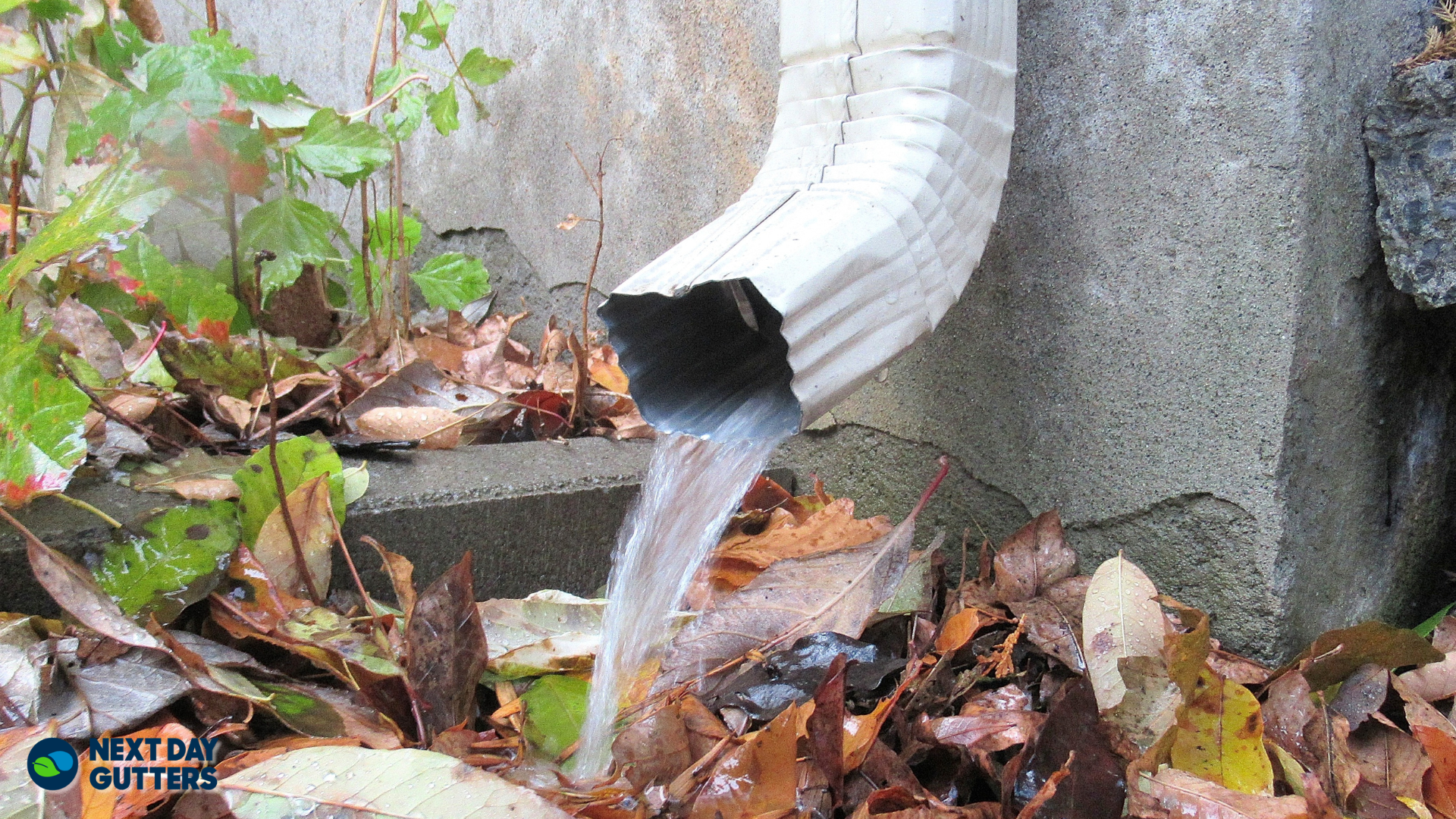
However, the new downspout also needs somewhere to discharge the water safely. Simply moving more water to the ground will not solve the problem if it collects next to the foundation.
The entire drainage path should be considered before making changes.
Where Should Downspouts Be Located?
Downspouts are often installed near the corners of a home, but the best location depends on how the roof and gutters are designed.
They should be placed where water naturally collects and where it can be directed away from the house.
Homes with complex rooflines may need downspouts near valleys or between long gutter runs. Large homes may also need additional drainage points to prevent too much water from traveling through one section of gutter.
Downspouts should discharge onto properly positioned extensions, splash blocks, or another drainage system that moves water away from the foundation.
What Happens If You Do Not Have Enough Downspouts?
When water cannot leave the gutter system quickly enough, the gutters begin to fill.
Eventually, that water has to go somewhere.
It may spill over the front of the gutter, run behind it, collect around the foundation, or damage landscaping below.
The extra weight of standing water can also place unnecessary stress on the gutter system and its fasteners.
Over time, poor drainage can contribute to sagging gutters, damaged fascia boards, erosion, and moisture problems around the home.
Get the Right Gutter and Downspout System for Your Home
The right number of downspouts depends on more than the size of your house.
Roof layout, gutter capacity, rainfall, downspout size, and where the water goes after reaching the ground all need to be considered.
At Next Day Gutters, we install seamless gutters, larger downspouts, gutter guards, and drainage improvements designed around the needs of each property.
If your gutters overflow during storms or you are unsure whether your current downspouts are large enough, contact Next Day Gutters for a free estimate. Our team can inspect your gutter system and recommend the right solution for your home.
Frequently Asked Questions
How many downspouts should a typical house have?
The number varies based on roof size and gutter layout. A common starting point is one downspout for every 30 to 40 feet of gutter, but larger or more complex roofs may require additional downspouts.
Can too few downspouts cause gutters to overflow?
Yes. If water enters the gutters faster than the downspouts can drain it, the gutters may overflow even when there are no clogs.
Are larger downspouts better?
Larger downspouts can move more water and are less likely to clog, but they should be properly matched to the gutter size and drainage needs of the home.
Can another downspout be added to my existing gutters?
Often, yes. If the gutters are still in good condition, adding another properly placed downspout may improve drainage without requiring a complete gutter replacement.